### Why These Specs Matter for Movies
When choosing between 4K projectors and OLED TVs for cinematic movie watching, focus on specs that deliver sharpness, vibrant colors, deep blacks, and immersive scale. OLED TVs excel in contrast and color accuracy in any room, while projectors shine in dedicated dark spaces for massive screens. Key metrics ensure Hollywood-level quality: native 4K resolution avoids pixel-doubling artifacts; dynamic HDR formats like Dolby Vision enhance shadow detail and highlights; 120Hz+ refresh rates smooth fast action; HDMI 2.1 supports high-bandwidth sources like 4K Blu-ray players; brightness must combat ambient light (TVs: 1000+ nits peak; projectors: 2000+ ANSI lumens); infinite contrast on OLED crushes projectors' high dynamic range; and projectors add throw ratio for setup flexibility, lens shift for alignment, and laser lamp life over 20,000 hours.
### Resolution: Native 4K for Sharpness
Resolution measures pixels: 4K (3840x2160) provides razor-sharp detail up close. Native 4K panels/chips render true 4K without upscaling blurry 1080p or pixel-shifting Full HD (common in budget projectors). 8K (7680x4320) is overkill for movies-most content is 4K max, and human eyes can't discern it beyond 10ft on 100in screens.
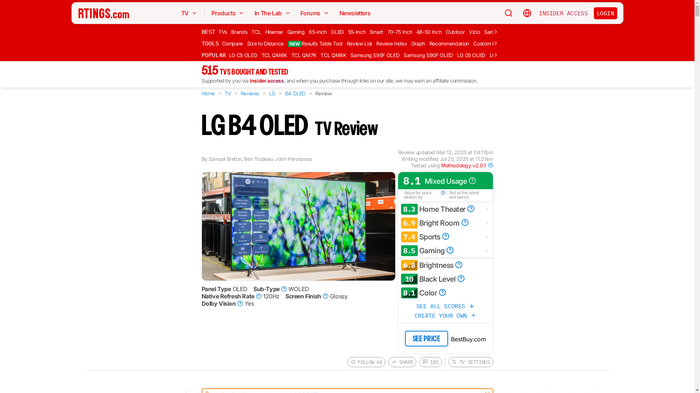
**OLED TV example:** LG G5 (2025) uses native 4K WOLED panel.
**Projector example:** Sony VPL-XW6000ES (2025) native 4K SXRD chip.
Skip non-native unless budget-crunched; it muddies fine textures in films like *Dune*.
### HDR: Dolby Vision or HDR10+ for Dynamic Movies
HDR (High Dynamic Range) expands contrast and color beyond SDR. HDR10 is static metadata (one-tone map fits all); Dolby Vision/HDR10+ use dynamic scene-by-scene tweaks for precise highlights (e.g., explosions) and blacks (space voids). HLG suits live TV but lags for movies. Look for 10-bit color minimum.
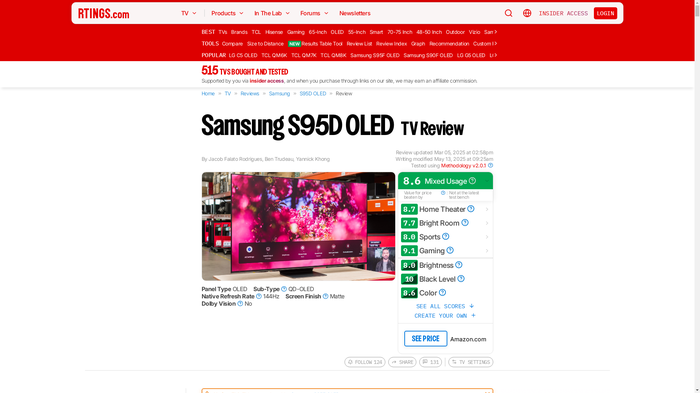
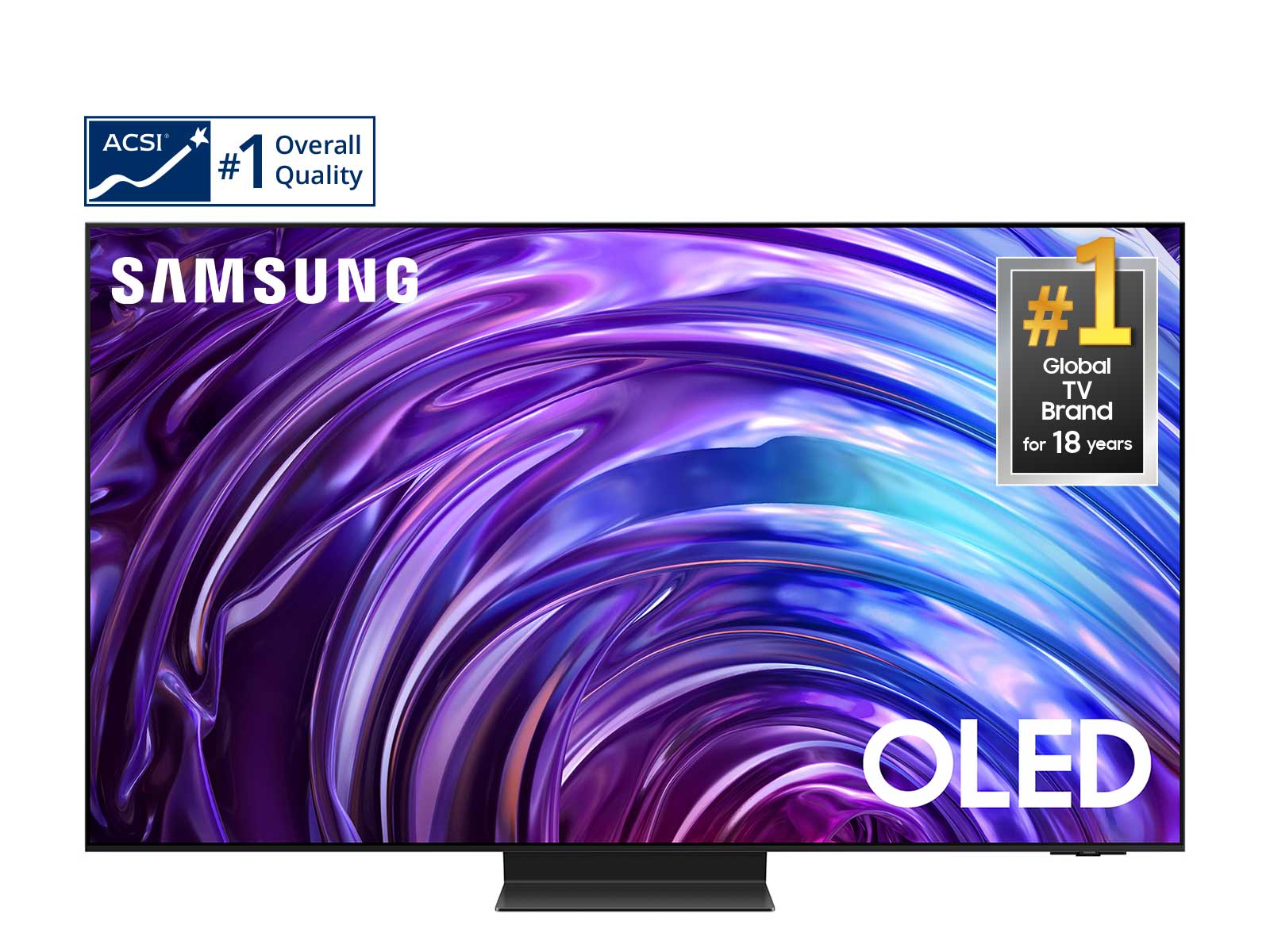
**OLED:** Samsung S95F (2025) supports HDR10+/Dolby Vision.
**Projector:** JVC DLA-NZ800 (2025) excels in Dolby Vision laser mode.
Prioritize dynamic formats-static HDR10 washes out in *Oppenheimer*'s fireballs.
### Refresh Rate: 120Hz+ for Smooth Motion
Measured in Hz (cycles/sec), it handles motion blur. 60Hz stutters panning shots; 120Hz/144Hz inserts frames for fluidity, ideal for 24fps films or action. Motion interpolation (e.g., TruMotion) can add soap-opera effect-disable for purists.
**Both:** Essential for HDMI 2.1 sources at 4K/120Hz. Epson LS12000 (2025 projector) hits 120Hz.
### HDMI 2.1: Bandwidth for Future-Proof Sources
HDMI 2.1 offers 48Gbps for uncompressed 4K/120Hz HDR, plus VRR (Variable Refresh Rate) to kill tearing, ALLM (Auto Low Latency Mode) for instant gaming switch, and eARC for lossless Dolby Atmos audio. Need 2+ ports for Blu-ray + streamer. Older HDMI 2.0 caps at 4K/60Hz.
### Brightness: Nits (TVs) vs. ANSI Lumens (Projectors)
Brightness fights glare. TVs: 1000+ peak nits for HDR "pop" in lit rooms (LG G5: 2000 nits). Projectors: ANSI lumens measure even light output-2000+ for dark rooms on 120in screens (Sony XW6000: 2500 lumens). Avoid <1500lm projectors in any light.
### Contrast Ratio: Infinite OLED vs. High Dynamic Projectors
Contrast is black-to-white range. OLED's pixel-level dimming hits "infinite" (perfect blacks). Projectors use dynamic iris/laser modulation for 100,000:1+ but leak light (JVC NZ800: 80,000:1). OLED wins pitch-black scenes; projectors scale bigger.
### Panel Tech: OLED TVs vs. Projector Engines
**OLED TVs:** Self-emissive pixels for perfect blacks, wide angles (e.g., Panasonic Z95A 2025). Burn-in risk low with modern safeguards.
**Projectors:** DLP/LCoS/LCD chips + laser light. DLP (Epson) fast, rainbow-free in latest; LCoS (Sony/JVC) cinematic contrast.
### Response Time & Extras for Projectors
<5ms pixel response kills blur (OLED: 0.1ms; projectors: 10-20ms). Projectors: Throw ratio (distance:screen size, e.g., 1.15-1.50:1 short-throw); lens shift (% vertical/horizontal) eases ceiling mount; 20k+ hour lasers beat 3000h lamps.
Prioritize OLED for simplicity/bright rooms, projectors for 150in+ theaters. Test in-store: play HDR demo discs. (478 words)