Note
### Key Facts
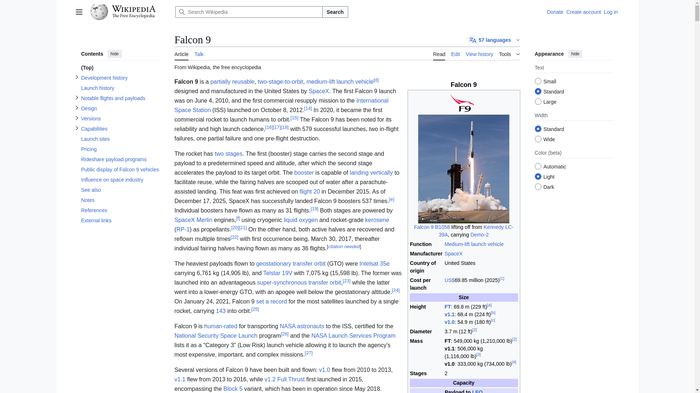
* **Falcon 9 Reusability**: First successful booster landing on December 21, 2015 (Orbcomm-2 mission); by October 2024, over 400 Falcon 9 launches with boosters reused up to 19 times (Booster 1058), slashing costs from ~$60 million per launch pre-reusability to ~$30-67 million today-a 50%+ reduction.
* **Crew Dragon Milestone**: Demo-2 mission on May 30, 2020, carried NASA astronauts Doug Hurley and Bob Behnken to the ISS, marking the first crewed orbital flight by a private company and ending U.S. reliance on Russian Soyuz seats (costing $80-90 million each vs. Crew Dragon's ~$55 million per seat).
* **Starship Vision**: Designed for full reusability with 100-150 metric tons to low Earth orbit; first full-stack orbital test flight (IFT-1) on April 20, 2023; aims to enable Mars colonization with 1,000+ ships transporting 1 million people by 2050, per Elon Musk.
* **Overall Impact**: SpaceX achieved 96 launches in 2023 alone (96% success rate), deploying 5,000+ Starlink satellites and generating $4.6 billion revenue in 2022.
### Important Details
SpaceX's reusability revolution began with the Falcon 9, transforming the economics of spaceflight. Traditional expendable rockets like the Space Shuttle cost $450 million per launch (adjusted for inflation) with minimal reuse, but SpaceX's vertical landing technology-powered by grid fins and cold-gas thrusters-enabled rapid turnaround. By 2024, a single booster like B1062 had flown 9 missions, proving reliability and driving launch prices below competitors like United Launch Alliance's Vulcan (~$100 million). This cost slash democratized access to space, enabling constellations like Starlink and frequent government contracts.
Crew Dragon marked a pivotal shift in human spaceflight. After the Shuttle program's 2011 retirement, NASA depended on Russia until SpaceX's Commercial Crew Program delivered. The capsule's SuperDraco abort engines and touchscreen interfaces ensured safety, with 13 crewed missions by 2024, including Axiom-1 (first private astronauts to ISS in 2022). It saved NASA billions-over $3 billion in Soyuz fees avoided-and spurred competitors like Boeing's Starliner.
Starship represents SpaceX's Mars ambition, a 120-meter, stainless-steel behemoth with Raptor engines using methane for in-situ refueling on Mars. Despite early explosions, iterative testing (over 20 prototypes) yielded progress, like the March 14, 2024, soft ocean landing of the Super Heavy booster. It targets uncrewed Mars missions by 2026 and human landings by 2028, potentially reducing interplanetary travel costs to <$10 million per ton.
### Practical Tips
* Track live launches via SpaceX's YouTube channel or NSF app to witness reusability firsthand-set alerts for Starship tests at Starbase, Texas.
* Dive deeper with "Liftoff" by Eric Berger or Elon Musk's X posts for real-time insights; join r/SpaceX on Reddit for data analysis.
* Apply lessons to your projects: embrace rapid iteration-prototype, test, fail fast-like SpaceX's "build, crash, repeat" philosophy.
**Summary:** SpaceX's reusability, Crew Dragon, and Starship have slashed costs, restored U.S. human spaceflight, and aimed for multi-planetary life, proving private innovation can redefine history. These takeaways inspire bold engineering and persistence in any field.** (Word count: 428)