WiseTrail

Investing for Beginners: Wealth Building Basics

By wiseman   |   Business
Create Trail
Share Tweet Share
Link copied to clipboard!
1 Explore Investment B...
2 How to Invest for Re...
3 See Blockchain in Ac...
4 Explore Bonds, Stock...
5 Your Action Plan: St...
6 Typewriter Close-Up:...
7 Avoid 7 Beginner Inv...
1 Explore Investment Basics: Wikipedia Website
Explore Investment Basics: Wikipedia
2 How to Invest for Retirement Video
3 See Blockchain in Action Image
See Blockchain in Action
4 Explore Bonds, Stocks, Funds & ETFs Website
Explore Bonds, Stocks, Funds & ETFs
5 Your Action Plan: Start Investing Today Note
6 Typewriter Close-Up: "Investments Image
Typewriter Close-Up: "Investments
7 Avoid 7 Beginner Investing Mistakes! Video
Explore Investment Basics: Wikipedia
1 Explore Investment Basics: Wikipedia
Website
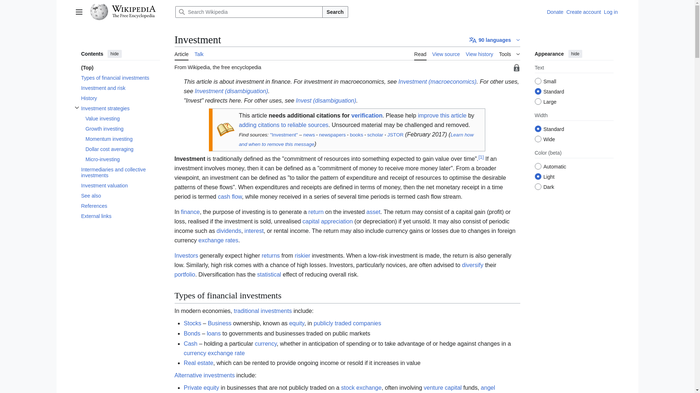
Dive into Wikipedia's investment basics page. You'll discover the core definition-committing resources to gain value over time-and key concepts for beginners. Build a solid foundation for your investing journey!
2 How to Invest for Retirement
Video
Discover how to invest for retirement in this beginner video from Khan Academy. You'll learn simple strategies to build long-term wealth and secure your future. Perfect for kickstarting your investing journey.
See Blockchain in Action
3 See Blockchain in Action
Image
Witness blockchain in action through this dynamic visualization. You'll see secure, decentralized transactions flow across the network, unlocking key insights for beginner investors.
Explore Bonds, Stocks, Funds & ETFs
4 Explore Bonds, Stocks, Funds & ETFs
Website
Discover bonds, stocks, mutual funds, and ETFs on this beginner-friendly website. You'll learn how these core investment options offer potential for higher returns, building your foundation in investing for beginners.
5 Your Action Plan: Start Investing Today
Note
### Key Facts * The S&P 500 index has historically returned an average of 10.3% annually (including dividends) from 1926 through 2023, per data from New York University Stern School of Business. * U.S. brokerage accounts are insured by the Securities Investor Protection Corporation (SIPC) up to $500,000 in securities and $250,000 in cash per account. * A 2020 Vanguard study of international markets found lump-sum investing outperformed dollar-cost averaging (DCA) 68% of the time over 10-year periods, but DCA reduces timing risk. * As of 2023, over 62% of Americans own stock (Gallup poll), up from 55% in 2020, with Robinhood reporting 23.5 million funded accounts. * Fidelity Investments manages $12.6 trillion in assets under administration (AUA) as of Q4 2023, offering no account minimums for retail investors. ### Important Details This final step in the Investing for Beginners trail recaps core principles: start with low-cost index funds or ETFs tracking broad markets like the S&P 500 for diversification; embrace long-term holding (5-10+ years) to harness compounding; avoid market timing, as data shows it underperforms buy-and-hold strategies 80-90% of the time (per Morningstar studies); and prioritize emergency savings (3-6 months' expenses) before investing. Setting up a brokerage account is straightforward and free at most platforms. Choose beginner-friendly brokers like Vanguard (expense ratios as low as 0.03%), Fidelity, or Charles Schwab, which offer commission-free trades on U.S. stocks/ETFs since 2019. You'll need a Social Security number, bank details, and ID for verification (under Regulation S-P). Online applications take 10-15 minutes; funding starts at $0-$1,000 depending on the broker. Once open, buy your first investments-e.g., VTI (Vanguard Total Stock Market ETF, $300B+ AUM) for broad U.S. exposure. Next, implement dollar-cost averaging (DCA): invest fixed amounts (e.g., $100-500) regularly, regardless of market prices. This strategy, used by Warren Buffett for decades, buys more shares when prices dip, averaging your cost basis. Studies like Fidelity's (1970-2020) confirm DCA beats trying to time lows in volatile markets. ### Tips/Next Steps * Compare 3 brokers using sites like BrokerChooser: check expense ratios (<0.1%), tools (e.g., Fidelity's Planning & Guidance Center), and mobile apps. * Fund via ACH transfer (instant at Robinhood); set up automatic monthly investments for DCA to enforce discipline. * Track progress quarterly via apps like Personal Capital; rebalance annually to maintain 80/20 stocks/bonds allocation. * Continue learning: read "The Little Book of Common Sense Investing" by John Bogle; join free communities like Bogleheads.org. **Summary:** Mastering these steps equips you to invest confidently-open your account today, start DCA, and let compounding build wealth over time. You've completed the trail; consistent action is your next milestone.** (Word count: 428)
Typewriter Close-Up: "Investments
6 Typewriter Close-Up: "Investments
Image
Discover a captivating close-up of a vintage typewriter boldly typing "Investments." You'll uncover the timeless spark of financial opportunity, igniting your beginner's journey into smart investing.
7 Avoid 7 Beginner Investing Mistakes!
Video
Discover 7 common beginner investing mistakes that cause financial setbacks and learn proven ways to avoid them. You'll gain essential tips to build your financial literacy in this Investing for Beginners video.
1
Explore Investment Basics: Wikipedia
Website
Dive into Wikipedia's investment basics page. You'll discover the core definition-committing resources to gain value over time-and key concepts for beginners. Build a solid foundation for your investing journey!
Explore Investment Basics: Wikipedia

Click image to try loading live site

Live Site Preview

Some sites may not allow embedding

Visit Website in New Tab
2
How to Invest for Retirement
Video
Discover how to invest for retirement in this beginner video from Khan Academy. You'll learn simple strategies to build long-term wealth and secure your future. Perfect for kickstarting your investing journey.
3
See Blockchain in Action
Image
Witness blockchain in action through this dynamic visualization. You'll see secure, decentralized transactions flow across the network, unlocking key insights for beginner investors.
See Blockchain in Action
4
Explore Bonds, Stocks, Funds & ETFs
Website
Discover bonds, stocks, mutual funds, and ETFs on this beginner-friendly website. You'll learn how these core investment options offer potential for higher returns, building your foundation in investing for beginners.
Explore Bonds, Stocks, Funds & ETFs

Click image to try loading live site

Live Site Preview

Some sites may not allow embedding

Visit Website in New Tab
5
Your Action Plan: Start Investing Today
Note
### Key Facts * The S&P 500 index has historically returned an average of 10.3% annually (including dividends) from 1926 through 2023, per data from New York University Stern School of Business. * U.S. brokerage accounts are insured by the Securities Investor Protection Corporation (SIPC) up to $500,000 in securities and $250,000 in cash per account. * A 2020 Vanguard study of international markets found lump-sum investing outperformed dollar-cost averaging (DCA) 68% of the time over 10-year periods, but DCA reduces timing risk. * As of 2023, over 62% of Americans own stock (Gallup poll), up from 55% in 2020, with Robinhood reporting 23.5 million funded accounts. * Fidelity Investments manages $12.6 trillion in assets under administration (AUA) as of Q4 2023, offering no account minimums for retail investors. ### Important Details This final step in the Investing for Beginners trail recaps core principles: start with low-cost index funds or ETFs tracking broad markets like the S&P 500 for diversification; embrace long-term holding (5-10+ years) to harness compounding; avoid market timing, as data shows it underperforms buy-and-hold strategies 80-90% of the time (per Morningstar studies); and prioritize emergency savings (3-6 months' expenses) before investing. Setting up a brokerage account is straightforward and free at most platforms. Choose beginner-friendly brokers like Vanguard (expense ratios as low as 0.03%), Fidelity, or Charles Schwab, which offer commission-free trades on U.S. stocks/ETFs since 2019. You'll need a Social Security number, bank details, and ID for verification (under Regulation S-P). Online applications take 10-15 minutes; funding starts at $0-$1,000 depending on the broker. Once open, buy your first investments-e.g., VTI (Vanguard Total Stock Market ETF, $300B+ AUM) for broad U.S. exposure. Next, implement dollar-cost averaging (DCA): invest fixed amounts (e.g., $100-500) regularly, regardless of market prices. This strategy, used by Warren Buffett for decades, buys more shares when prices dip, averaging your cost basis. Studies like Fidelity's (1970-2020) confirm DCA beats trying to time lows in volatile markets. ### Tips/Next Steps * Compare 3 brokers using sites like BrokerChooser: check expense ratios (<0.1%), tools (e.g., Fidelity's Planning & Guidance Center), and mobile apps. * Fund via ACH transfer (instant at Robinhood); set up automatic monthly investments for DCA to enforce discipline. * Track progress quarterly via apps like Personal Capital; rebalance annually to maintain 80/20 stocks/bonds allocation. * Continue learning: read "The Little Book of Common Sense Investing" by John Bogle; join free communities like Bogleheads.org. **Summary:** Mastering these steps equips you to invest confidently-open your account today, start DCA, and let compounding build wealth over time. You've completed the trail; consistent action is your next milestone.** (Word count: 428)
### Key Facts
* The S&P 500 index has historically returned an average of 10.3% annually (including dividends) from 1926 through 2023, per data from New York University Stern School of Business.
* U.S. brokerage accounts are insured by the Securities Investor Protection Corporation (SIPC) up to $500,000 in securities and $250,000 in cash per account.
* A 2020 Vanguard study of international markets found lump-sum investing outperformed dollar-cost averaging (DCA) 68% of the time over 10-year periods, but DCA reduces timing risk.
* As of 2023, over 62% of Americans own stock (Gallup poll), up from 55% in 2020, with Robinhood reporting 23.5 million funded accounts.
* Fidelity Investments manages $12.6 trillion in assets under administration (AUA) as of Q4 2023, offering no account minimums for retail investors.

### Important Details
This final step in the Investing for Beginners trail recaps core principles: start with low-cost index funds or ETFs tracking broad markets like the S&P 500 for diversification; embrace long-term holding (5-10+ years) to harness compounding; avoid market timing, as data shows it underperforms buy-and-hold strategies 80-90% of the time (per Morningstar studies); and prioritize emergency savings (3-6 months' expenses) before investing.

Setting up a brokerage account is straightforward and free at most platforms. Choose beginner-friendly brokers like Vanguard (expense ratios as low as 0.03%), Fidelity, or Charles Schwab, which offer commission-free trades on U.S. stocks/ETFs since 2019. You'll need a Social Security number, bank details, and ID for verification (under Regulation S-P). Online applications take 10-15 minutes; funding starts at $0-$1,000 depending on the broker. Once open, buy your first investments-e.g., VTI (Vanguard Total Stock Market ETF, $300B+ AUM) for broad U.S. exposure.

Next, implement dollar-cost averaging (DCA): invest fixed amounts (e.g., $100-500) regularly, regardless of market prices. This strategy, used by Warren Buffett for decades, buys more shares when prices dip, averaging your cost basis. Studies like Fidelity's (1970-2020) confirm DCA beats trying to time lows in volatile markets.

### Tips/Next Steps
* Compare 3 brokers using sites like BrokerChooser: check expense ratios (<0.1%), tools (e.g., Fidelity's Planning & Guidance Center), and mobile apps.
* Fund via ACH transfer (instant at Robinhood); set up automatic monthly investments for DCA to enforce discipline.
* Track progress quarterly via apps like Personal Capital; rebalance annually to maintain 80/20 stocks/bonds allocation.
* Continue learning: read "The Little Book of Common Sense Investing" by John Bogle; join free communities like Bogleheads.org.

**Summary:** Mastering these steps equips you to invest confidently-open your account today, start DCA, and let compounding build wealth over time. You've completed the trail; consistent action is your next milestone.** (Word count: 428)
6
Typewriter Close-Up: "Investments
Image
Discover a captivating close-up of a vintage typewriter boldly typing "Investments." You'll uncover the timeless spark of financial opportunity, igniting your beginner's journey into smart investing.
Typewriter Close-Up: "Investments
7
Avoid 7 Beginner Investing Mistakes!
Video
Discover 7 common beginner investing mistakes that cause financial setbacks and learn proven ways to avoid them. You'll gain essential tips to build your financial literacy in this Investing for Beginners video.

Created with WiseTrail